
Hamburg Noir

PULP TO FILM
The Postman Always Rings Twice
PULP
The Postman Always Rings Twice (Jame M. Cain, 1934)
FILM
The Postman Always Rings Twice (Tay Garnett, 1946)
The Postman Always Rings Twice (Bob Rafelson, 1981)
An isolated roadside diner, a penny-pinching owner, his restless young wife, a “Man Wanted” sign out front, and a no-good drifter. What could go wrong?
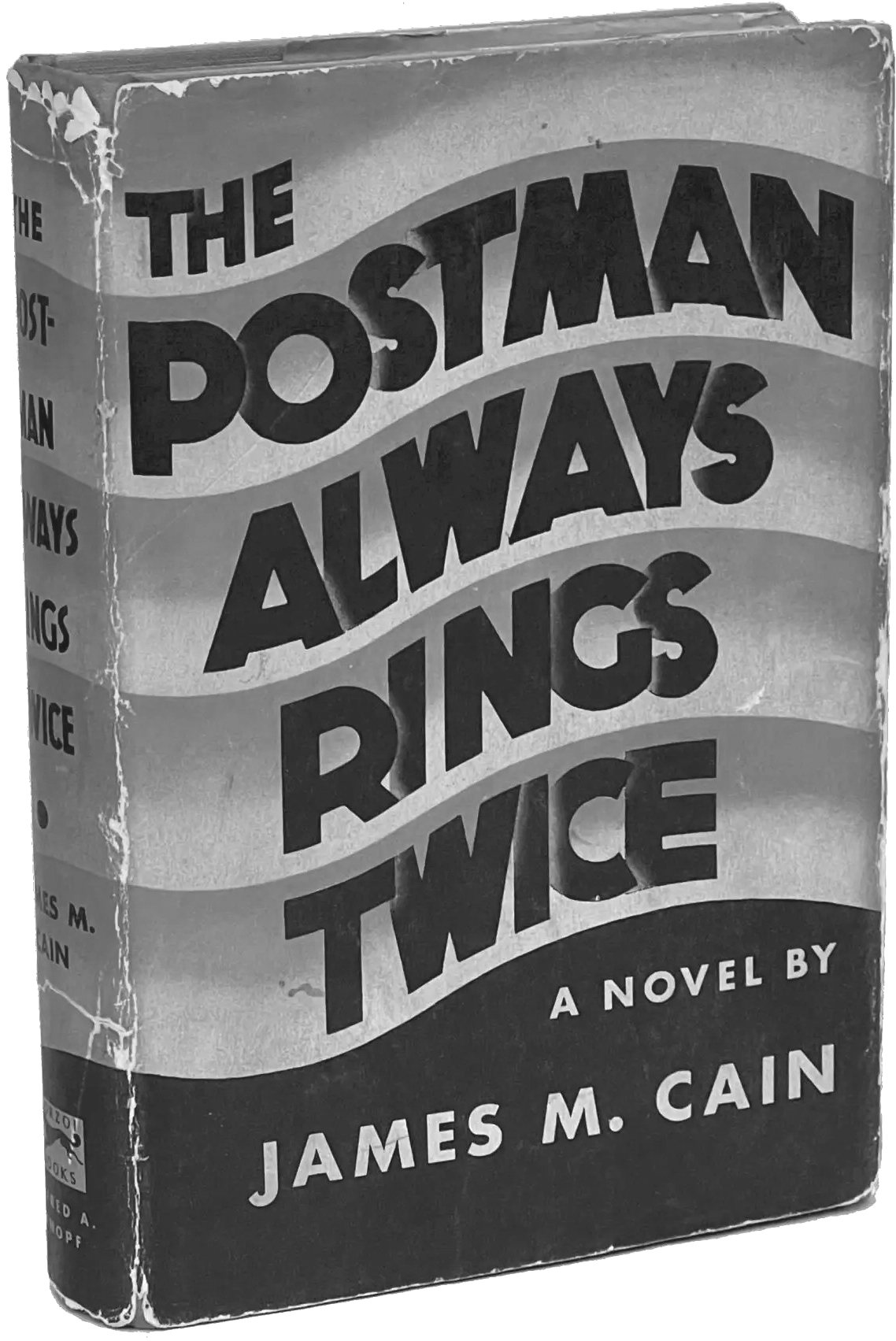
Written by James M. Cain in the middle of the Great Depression, The Postman Always Rings Twice opens twenty minutes outside Los Angeles with a hobo experience that would have been familiar to readers at the time: “They threw me off the hay truck about noon.” The speaker, Frank Chambers, heads to “a roadside sandwich joint” named Twin Oaks Tavern.
Once inside, Frank demonstrates his iffy character with an obvious lie to get a free lunch: “I asked if a guy had been by in a Cadillac. He was to pick me up here, I said, and we were to have lunch.” (This scene is repeated two decades later in Jim Thompson’s 1955 pulp After Dark, My Sweet. It also brings to mind Andreas Feininger’s legendary 1948 photo Route 66.) The roadhouse owner, Nick Papadakis, doesn’t seem to notice Frank’s lie -- or care. He’s looking for a mechanic, and Frank fits the bill.
For his part, Frank has no interest in the job, just finishing his lunch -- until the waitress appears:
Then I saw her. She had been out back, in the kitchen, but she came in to gather up my dishes. Except for the shape, she really wasn’t any raving beauty, but she had a sulky look to her, and her lips stuck out in a way that made me want to mash them in for her
The sulky young woman, who is half Nick’s age, turns out to be his wife, Cora. She avoids eye contact with Frank, but it’s clear that Nick is already the odd man out. Frank takes the job.
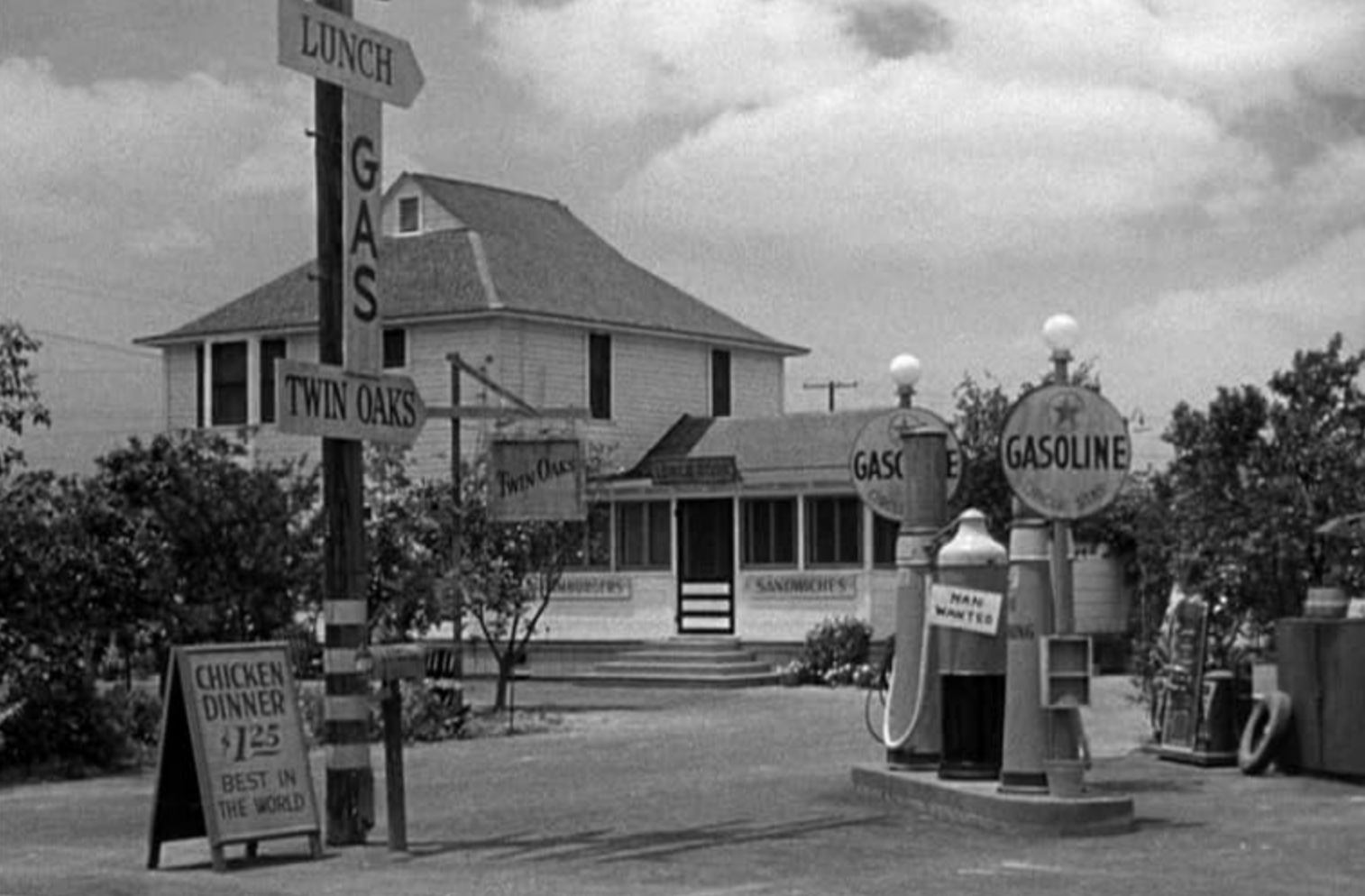
When a storm blows down Nick’s old-fashioned bulb sign, Frank convinces him to buy a modern neon sign in Los Angeles. After “the Greek” drives away, Frank accidentally on purpose locks the front door of the diner and makes his move.
Cora responds to his advances like a wild animal in heat:
“Bite me! Bite me!”
I bit her. I sunk my teeth into her lips so deep I could feel the blood spurt into my mouth. It was running down her neck when I carried her upstairs.
Although such scenes might offend modern sensibilities, they serve an important purpose. Their very ugliness underlines the wrongness of what we’re witnessing. As Cora tells Frank repeatedly: “You’re no good.” He agrees: “I’m no good, but I love you.” This is raw textbook pathology up close and personal -- from the mouths of borderline illiterates, who don’t hide behind big words. It feels so real, you forget you’re reading.
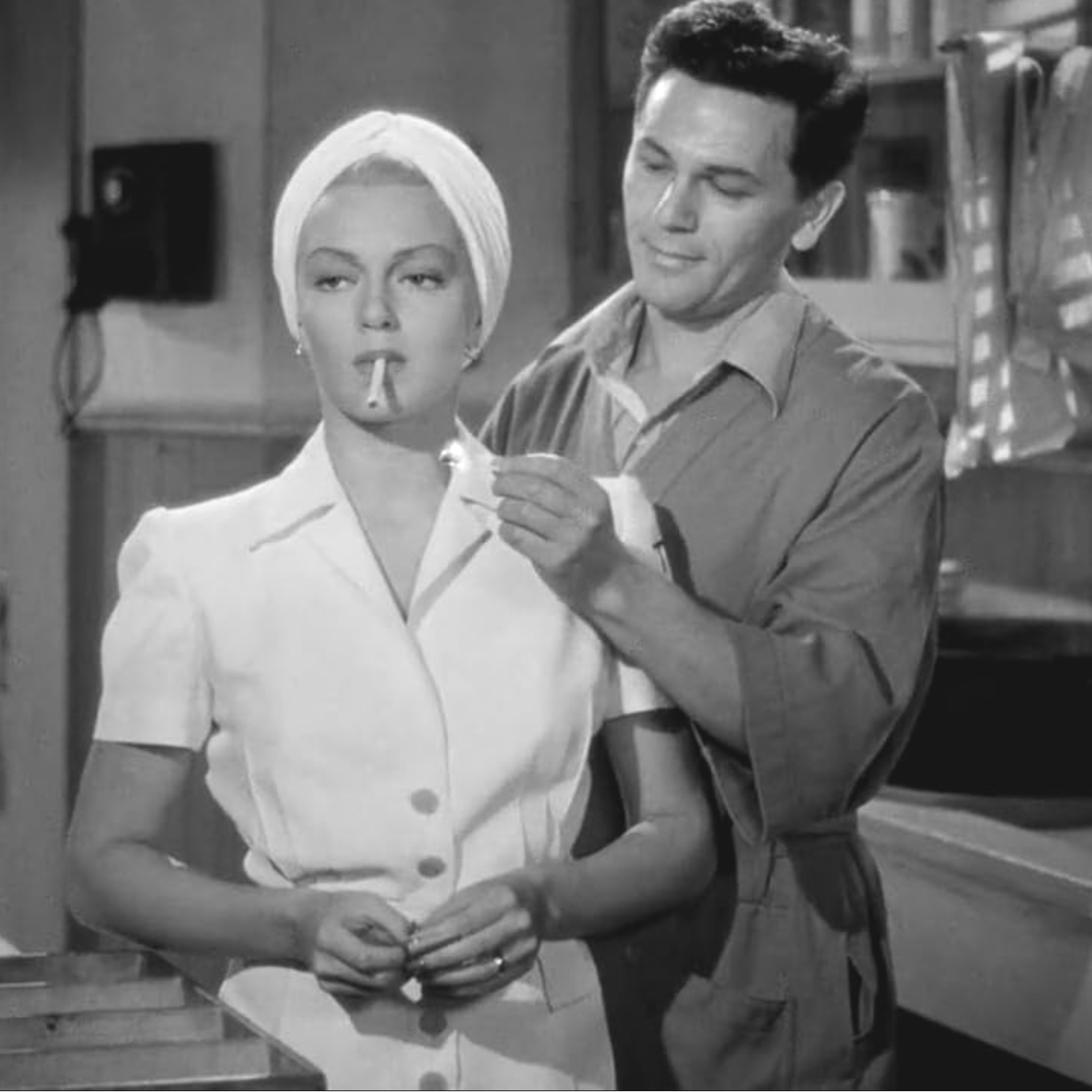
When Frank starts calling Cora a “hell cat,” her allusion to murder seems inevitable:
“Well, I’ve made one mistake. And I’ve got to be a hell cat, just once, to fix it. But I’m not really a hell cat, Frank.”
“They hang you for that.”
“Not if you do it right.”
Initially, they talk indirectly about getting rid of Nick, something they know will put them “in bed with the devil.” Then they decide to run off together. When that backfires, motive meets opportunity: Nick wants to take them to a fiesta in Santa Barbara. The two quickly decide on a staged auto accident in the Malibu Mountains, with Cora driving and the two men drunk in back.
It works almost too well, with an unconscious Nick in the car as it tumbles over the side of the road into a canyon. To make things look believable, Frank roughs up Cora, which doubles as a kind of sick foreplay. They go at it like animals with the smoking wreck in plain sight. That done, Frank climbs down to the car to cut himself for show. His weight sends the battered vehicle further down the canyon, injuring him badly.
After waking up in a police hospital, Frank is interviewed by a hard-nosed district attorney with a highly developed psychological IQ:
“Come on, I’ve seen her, I tell you. I’d have been in there if I had to kick the door down and hang for rape. So would you. So were you.”
This seamy argument is the climax of an emotionally manipulative conversation that could be used in modern police interrogation handbooks.
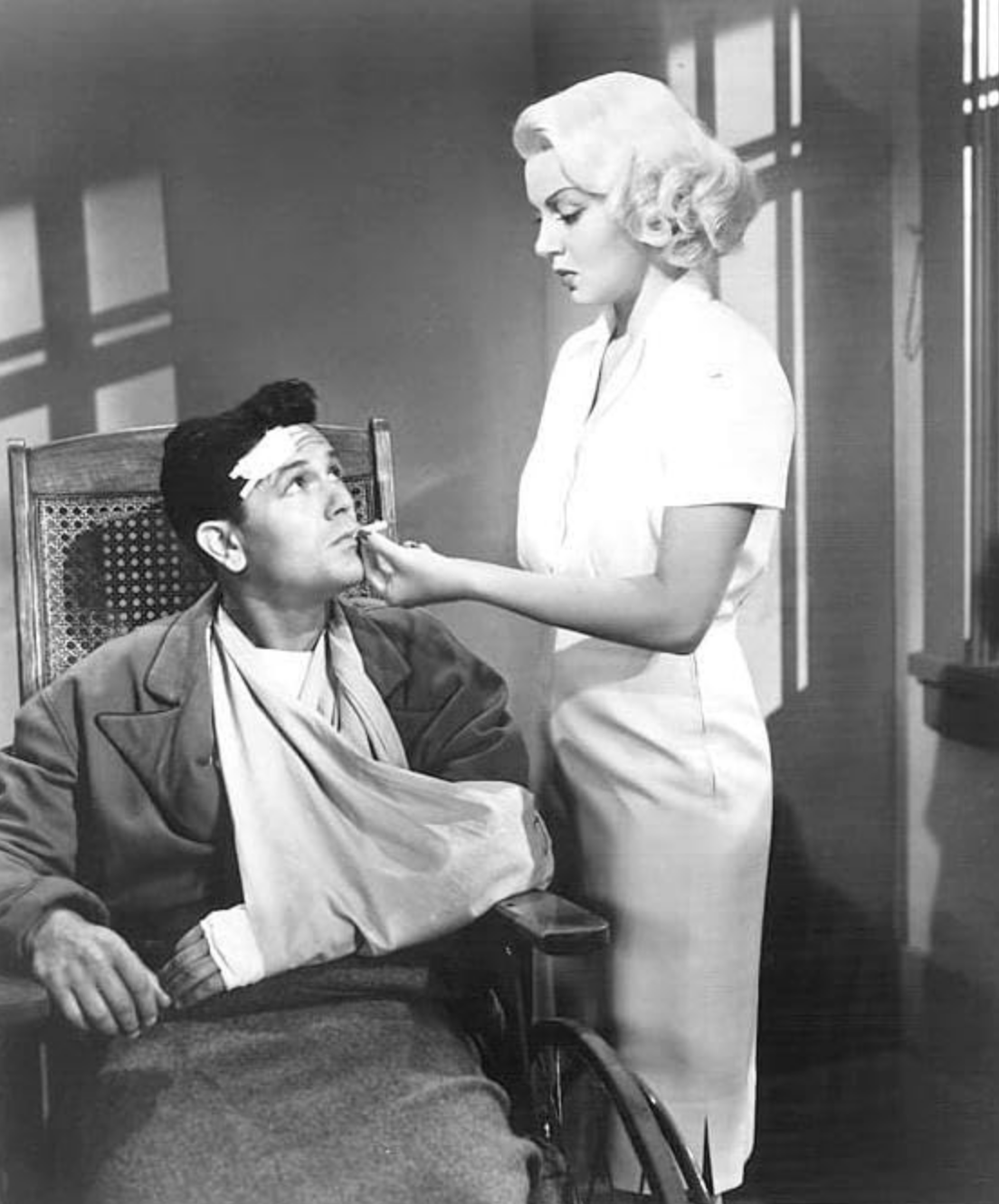
Frank agrees to file a complaint against Cora, who responds in kind. Only an unscrupulous defense attorney saves the two killers, with legal jujitsu involving an underling who pretends to be a policeman assigned to take Cora’s statement. In the end, her conviction is reduced to manslaughter with a suspended sentence.
What comes next makes what came before seem like Sunday School. First, the sleazeball who took Cora’s statement tries to blackmail them. Frank beats him up repeatedly, confiding in the reader like a character in The Sopranos: “If you ever tried to break the second joint of a tough turkey, maybe you know how hard it is to break a guy’s arm with a hammerlock.” If anything, Cora is worse: “She leaned back and an awful smile flickered around the corner of her mouth. I think that smile scared Kennedy worse than anything I had done.”
After they dispense with the blackmailer and his sordid colleagues, they go after each other: “Frank, I know what you’ve been doing. You’ve been lying there, trying to think of a way to kill me.” Frank agrees, confiding in the reader: “But love, when you get fear in it, it’s not love any more. It’s hate.”
Seemingly without effort, Cora then flips her own logic, telling Frank she’s pregnant with his baby, something she thinks will make up for their crime: “We took a life, didn’t we? And now we’re going to give one back.” Incredibly, Frank agrees: “That’s right.”
None of this would be believable without Cora’s condition for marriage, which by now almost makes sense to the reader, who has been subject to a hundred pages of Cain’s moral undertow:
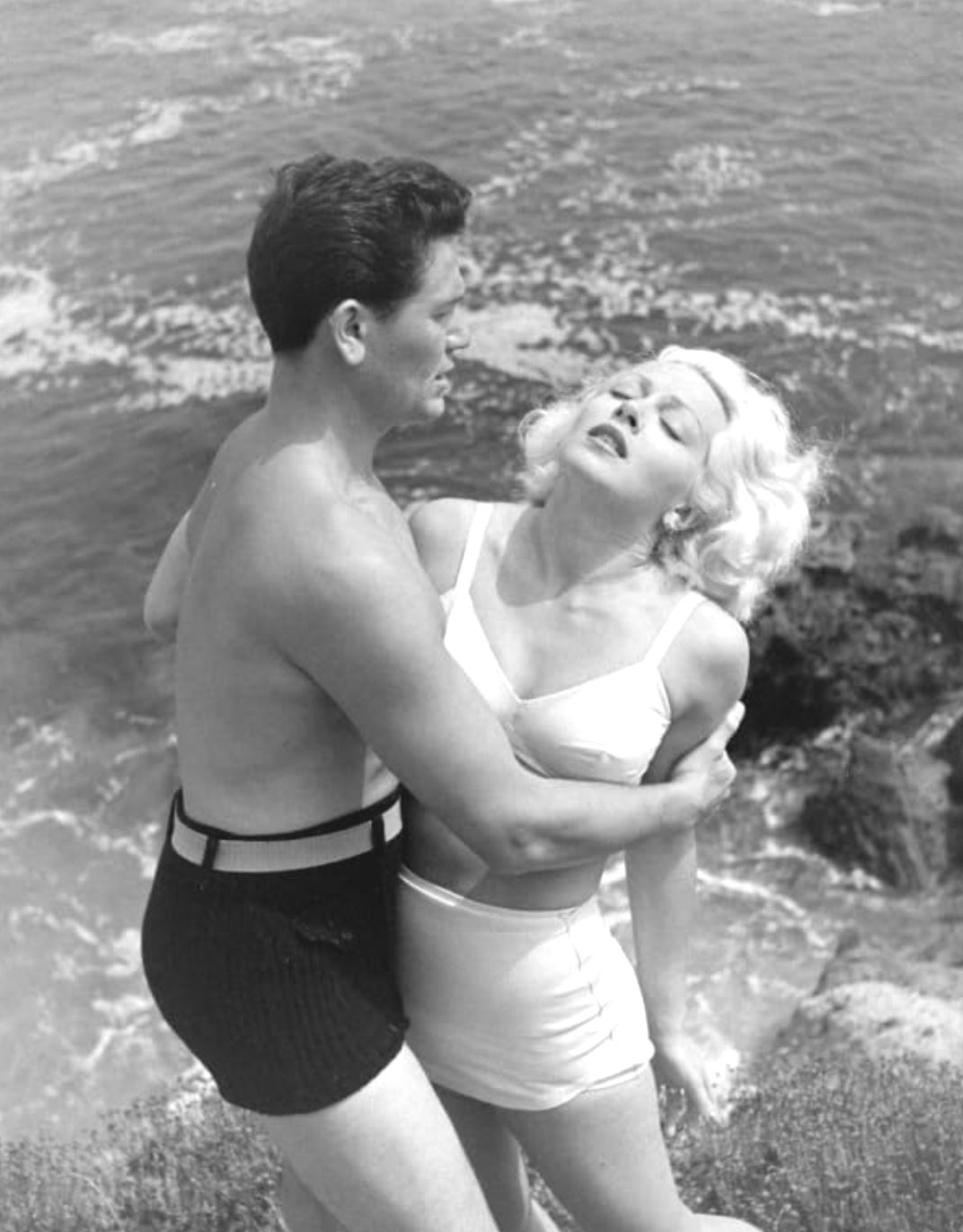
“You can kill me swimming. We’ll go way out, the way we did last time, and if you don’t want me to come back, you don’t have to let me. Nobody’ll ever know.”
So, they get married and ... go swimming. When Cora has a coughing spell out in the water, Frank tows her to safety, only to lose her on the way to the hospital in a car crash that, ironically, really is an accident. This time, the court throws the book at him.
From death row, Frank has a final request for the reader:
Here they come. Father McConnell says prayers help. If you’ve got this far, send up one for me, and Cora, and make it that we’re together, wherever it is.
It’s a tribute to Cain that you find yourself wondering, if only for a brief moment, whether this is non-fiction. It’s much more difficult to believe that this is his first novel.
* * *

A film adaptation was completed right after World War II, with a screenplay co-authored for MGM by Cain himself. Not surprisingly, it follows the book fairly closely, albeit in sanitized form. Frank is played by John Garfield, whose rugged good looks, Lower East Side accent, and disarming innocence give the role unspoken depth. Cora is played by former pin-up girl Lana Turner, whose private life, which included seven husbands, kept the rumor mills hopping. A decade after the film hit theaters, one of her many lovers, a prominent gangster named Johnny Stompanato, was stabbed to death by her teenage daughter.
The screenwriters were forced to revise the story repeatedly to get it past the Hayes Code, making Garfield’s Frank halfway respectable, arriving in a well-pressed suit at the roadside diner in a car driven by the district attorney, of all people. They also make Nick a Canadian named Smith, Cora’s maiden name in the book. The writers change the motive from Cora’s physical disgust with Nick to her -- justified -- fear of having to take care of his “half-dead sister,” who she didn’t even know existed. Nick’s sudden decision to move back to “Northern Canada” without consulting her makes him a much less sympathetic victim than his predecessor in the book.
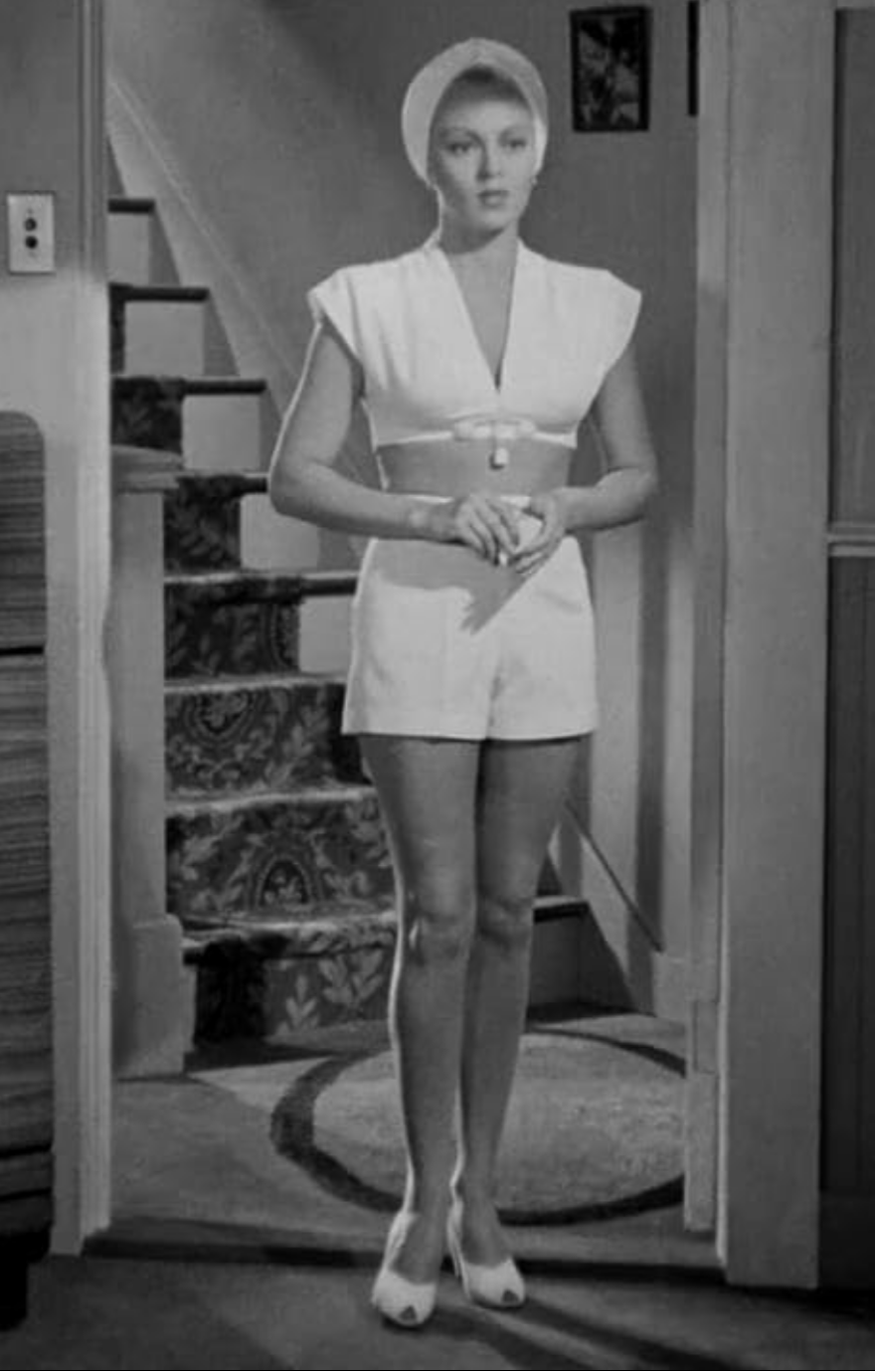
Fortunately, the screenwriters let Turner play Cora as a classic femme fatale. She introduces herself to Frank by dropping a tube of lipstick, which rolls on the ground toward him. The camera follows its path to Frank’s shoes and then back to Cora’s high heels. Frank makes her come to him to retrieve the lipstick, which she then applies ostentatiously.
Although the film is about extreme sex and violence, it shows neither. Instead, there’s lots of talk about midnight swims in the ocean, with a few moonlit scenes to fire up the audience’s imagination. (Both Turner and Garfield are clearly experienced ocean swimmers who dive into waves and even bodysurf back to the beach.) As in the book, the first attempt on Nick’s life isn’t shown. The cat’s agonized yowl and burned carcass get the point across. As does Cora’s audible and visible horror, which, to Turner’s credit, is almost more frightening than the aborted murder attempt itself.
In the film, the district attorney follows Cora, Frank, and Nick on their fateful drive to Malibu Lake, where he sees Cora waving for help before the car she was driving stops tumbling into the canyon. This not entirely believable simplification -- making the prosecutor an eyewitness -- is one of the factors that convinces Frank to turn on Cora.
The film does the book one better by explaining the title in the death-cell scene with Frank and the priest: “Well, he rang twice for Cora ... and now he’s ringing twice for me, isn’t he?”
In both book and film, Frank is obsessed with Cora. Emotionally, she’s the stronger of the two, using him not so much to escape her husband as to escape poverty: “I was working in a hash house. You spend two years in a Los Angeles hash house and you’ll take the first guy that’s got a gold watch.”
* * *
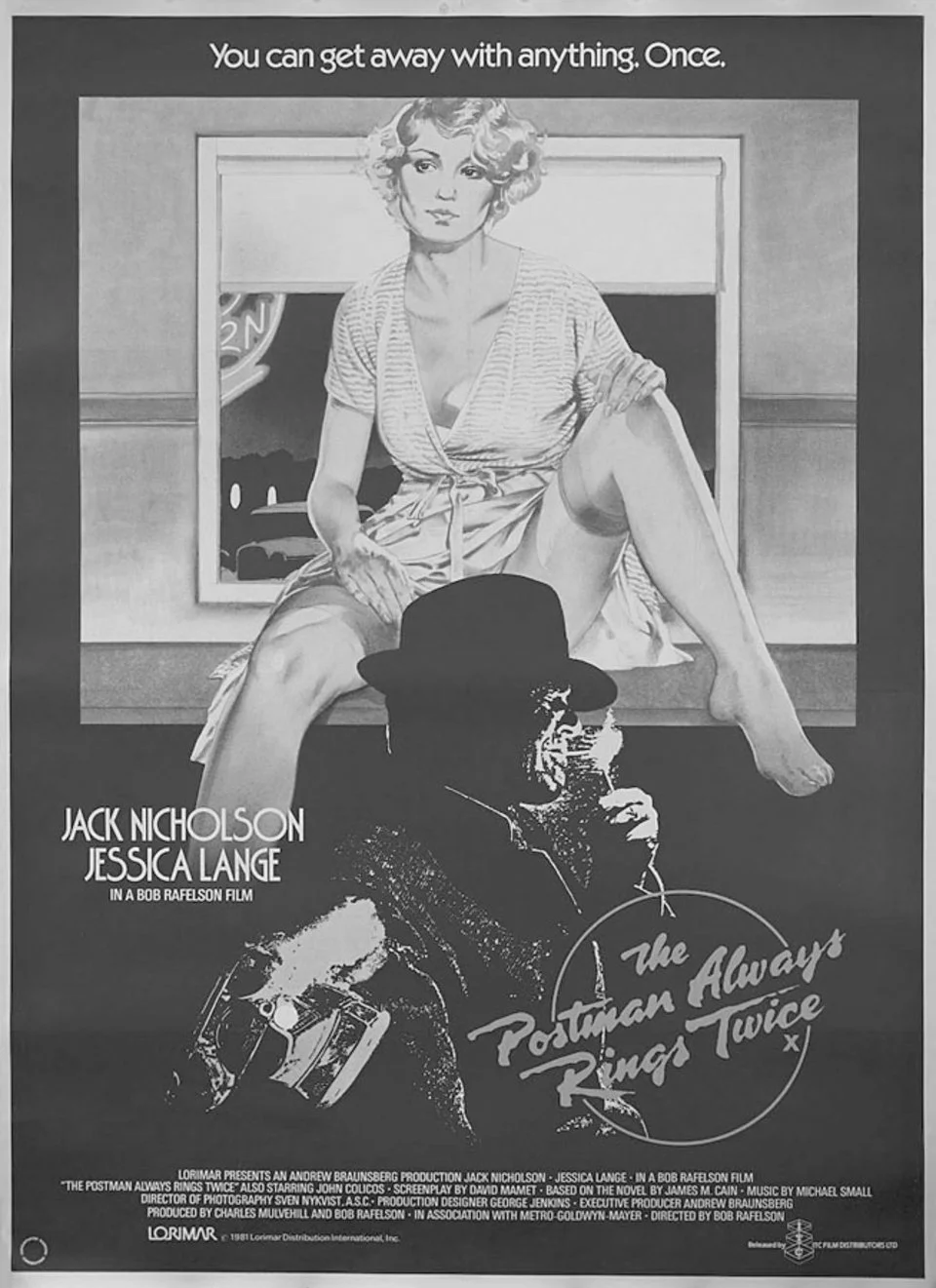
Unfortunately, Cora’s fixation on material success is missing in the 1981 remake, despite its impressive pedigree. The script comes from David Mamet, and the two lead roles are played by Jack Nicholson and Jessica Lange, wife of playwright Sam Shepard. Nicholson’s Frank is a less-than-likeable scoundrel with a dirty face and soul. And Lange’s Cora flashes blood lust with her eyes as she paces back and forth like a caged animal.
The film sets, wardrobes, cars, and cinematography give the scenes a gritty feel that puts you in the middle of the Great Depression. Any passing car might contain Bonnie and Clyde. Unlike the first film, which is set in the 1940s, the remake carefully reconstructs 1930s infrastructure, complete with a vintage Greyhound bus depot. In a nice touch, Nicholson reads a True Detective magazine.
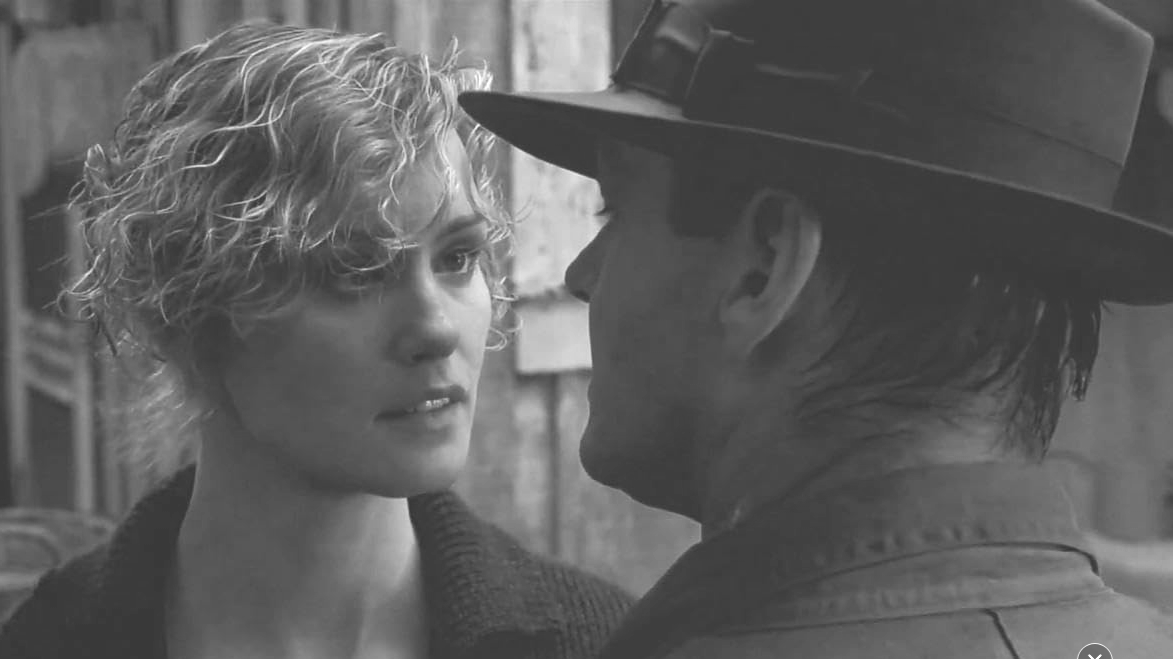
In the remake, Nick’s last name is again Papadakis. He plays up his heritage, drinking Greek wine, dancing to Greek music on vinyl records, and hosting a Greek-American party. When his Twin Oaks sign falls down, he blames American jingoism for its bad quality: “People take advantage of foreigners.”
As in the book, Cora is horrified by the thought of having sex with Nick. “He wants a baby from me. Can you imagine that?” The filmmakers are not shy about showing Nick as a disgusting drunk, at one point putting his ugly bare feet in Cora’s face and forcing her to say “your feet are beautiful” in Greek. Coming right after she has decided to kill him, the scene feels like a justification.
* * *
Like the book, both films conclude with brutal poetic justice, ending the downward spiral of Frank and Cora once and for all. Unlike the remake, the original film provides hardboiled redemption, with Frank acknowledging what he’s done and facing his worst fears with hopeful resolve, albeit for the afterlife