
Hamburg Noir

PULP TO FILM
Thieves Like Us
PULP
Thieves Like Us (Edward Anderson, 1937)
FILM
They Live by Night (Nicholas Ray, 1948)
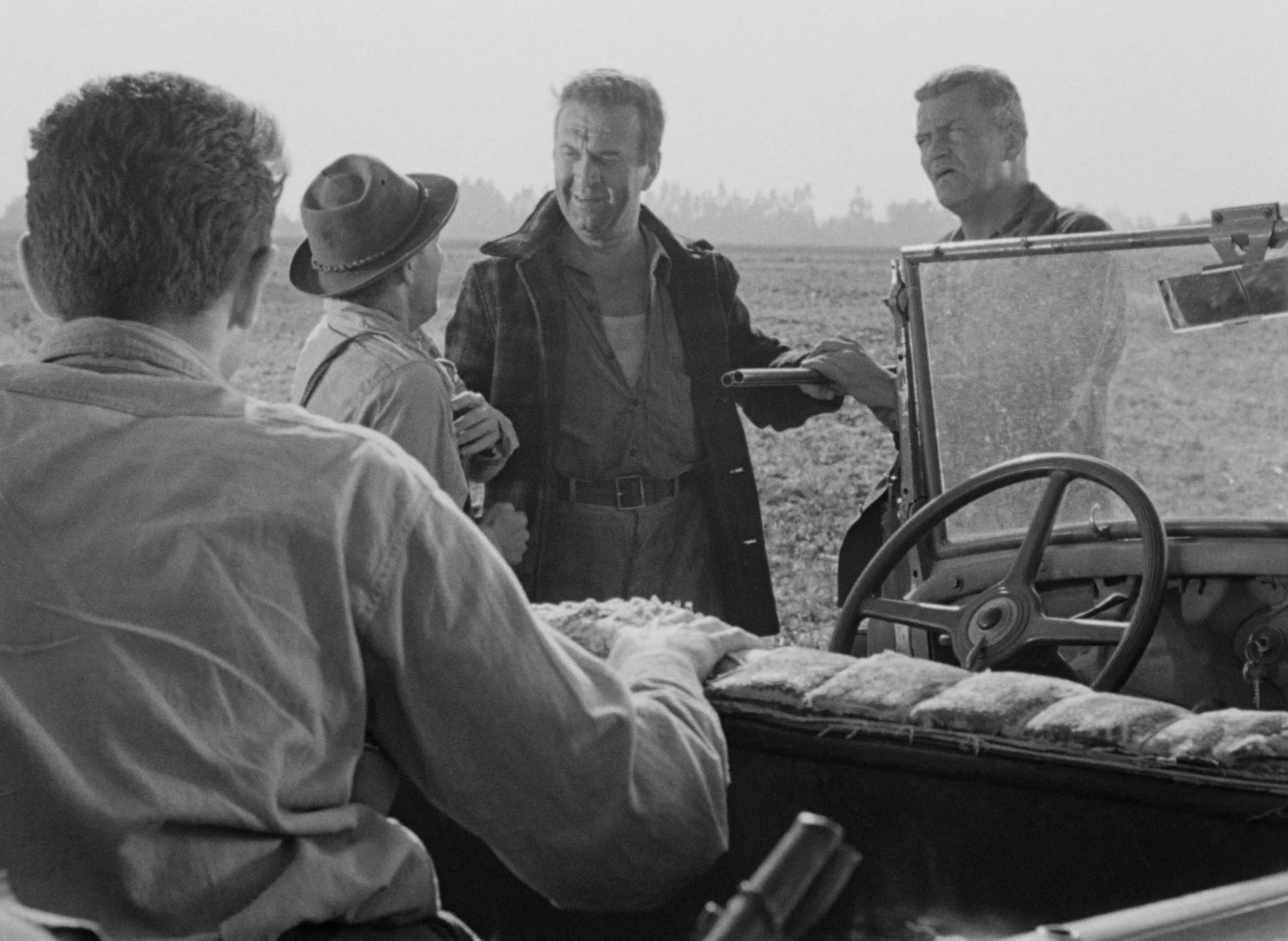
Thieves Like Us (Robert Altman, 1973)
In this noir gem from the Great Depression, Edward Anderson tells a rugged but touching love story about two Dustbowl Okies on the run from the law.
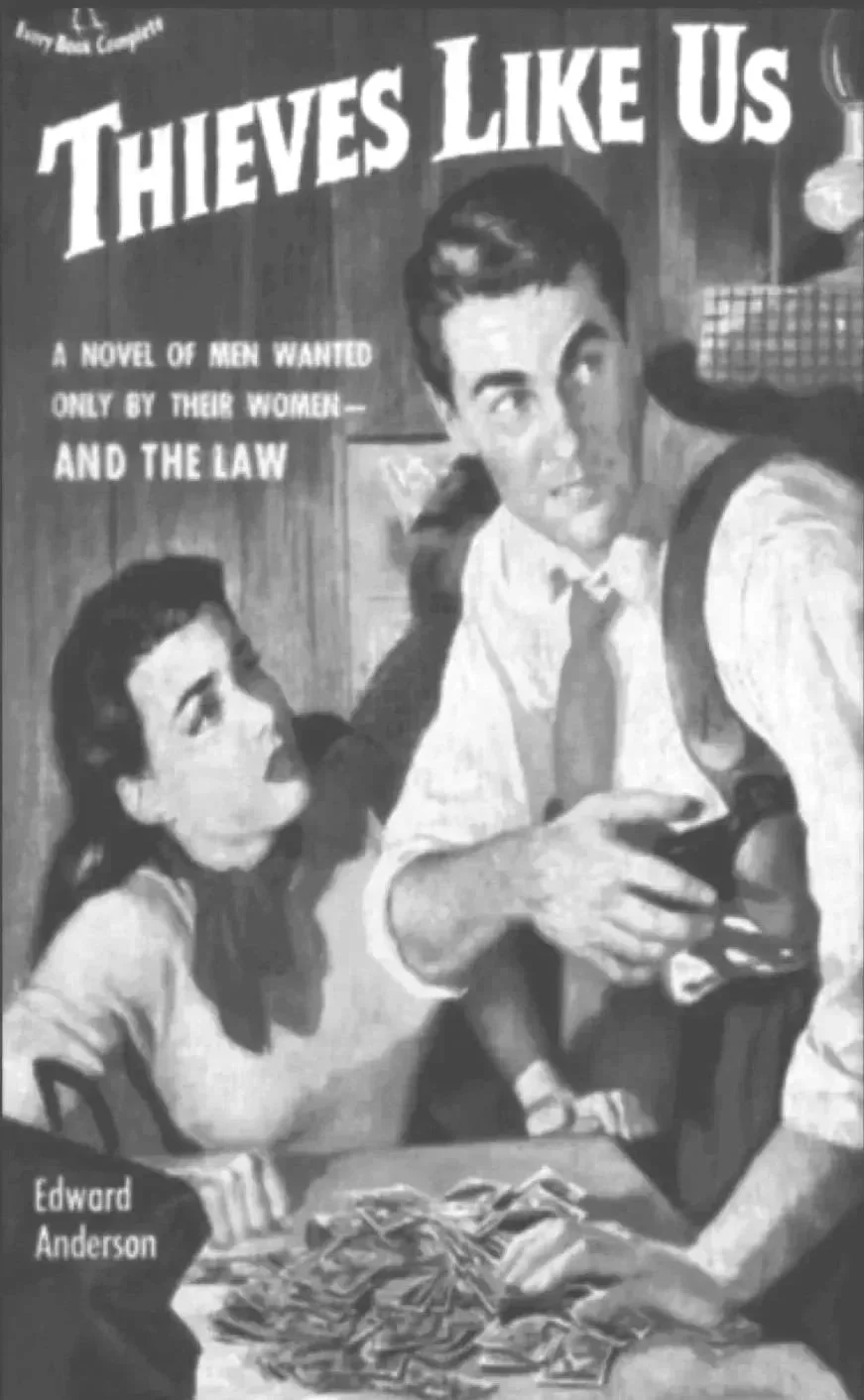
Raymond Chandler called Thieves Like Us “one of the great forgotten novels of the 30s.” In substance and style, it’s a cross between Dashiell Hammett’s hardboiled Red Harvest and John Steinbeck’s heart-wringing Grapes of Wrath. In this tradition of hard-bitten underdogs, Thieves Like Us tells the story of three small-time gangsters who have just broken out of Oklahoma’s Alcatona Penitentiary, aka “Alkie,” where they were serving life sentences. Like moths to the flame, they return to the one thing they know best: robbing small-town banks.
The crew is headed by T.W. (“T-Dub”) Masefield, age 44, a calm, rugged career criminal with dozens of bank robberies under his belt. His right hand is Elmo (“Chicamaw”) Mobley, age 37, “an Indian looking feller” with a weakness for alcohol and violence. The youngest member of the crew, Arthur (“Bowie”) Bowers, age 27, was convicted of killing a storekeeper when he was 18. He barely escaped getting “burned” in the electric chair. These characters fit the desperate times.
During the 1930s, many people who had literally lost the farm to the bank cheered on bandits like John Dillinger, another prison escapee, who they saw as one of their own, what Bowie calls “Normal People,” sticking it to bankers. The book’s title comes from a standard 1930s line: “Them capitalist fellows are thieves like us. They rob widows and orphans.” Bowie and his crew have no use for the gun-happy “Laws” and the “Square-Johns” who support them.
In real life, the FBI tracked down its Public Enemy No. 1 at his father’s farm in Mooresville, Indiana. Dillinger slipped their tail, only to head right into the center of their dragnet in Chicago, where they shot him down outside a movie theater on the North Side. He had been watching a gangster film called Manhattan Melodrama starring Clark Gable and Myrna Loy. You can’t make this stuff up.
In Thieves Like Us, the Dillinger stand-ins hide out in Keota, Iowa, with Chicamaw’s cousin, who runs a gas station and sells bootlegs corn whiskey. His daughter doesn’t approve of the bank robbers -- but she approves of Bowie. The feeling is mutual. “The voice of the girl, Keechie, made Bowie’s veins distend and there was a velvety, fluttering sensation in his spine.” He calls her “Little Soldier,” first in his mind, later to her face.
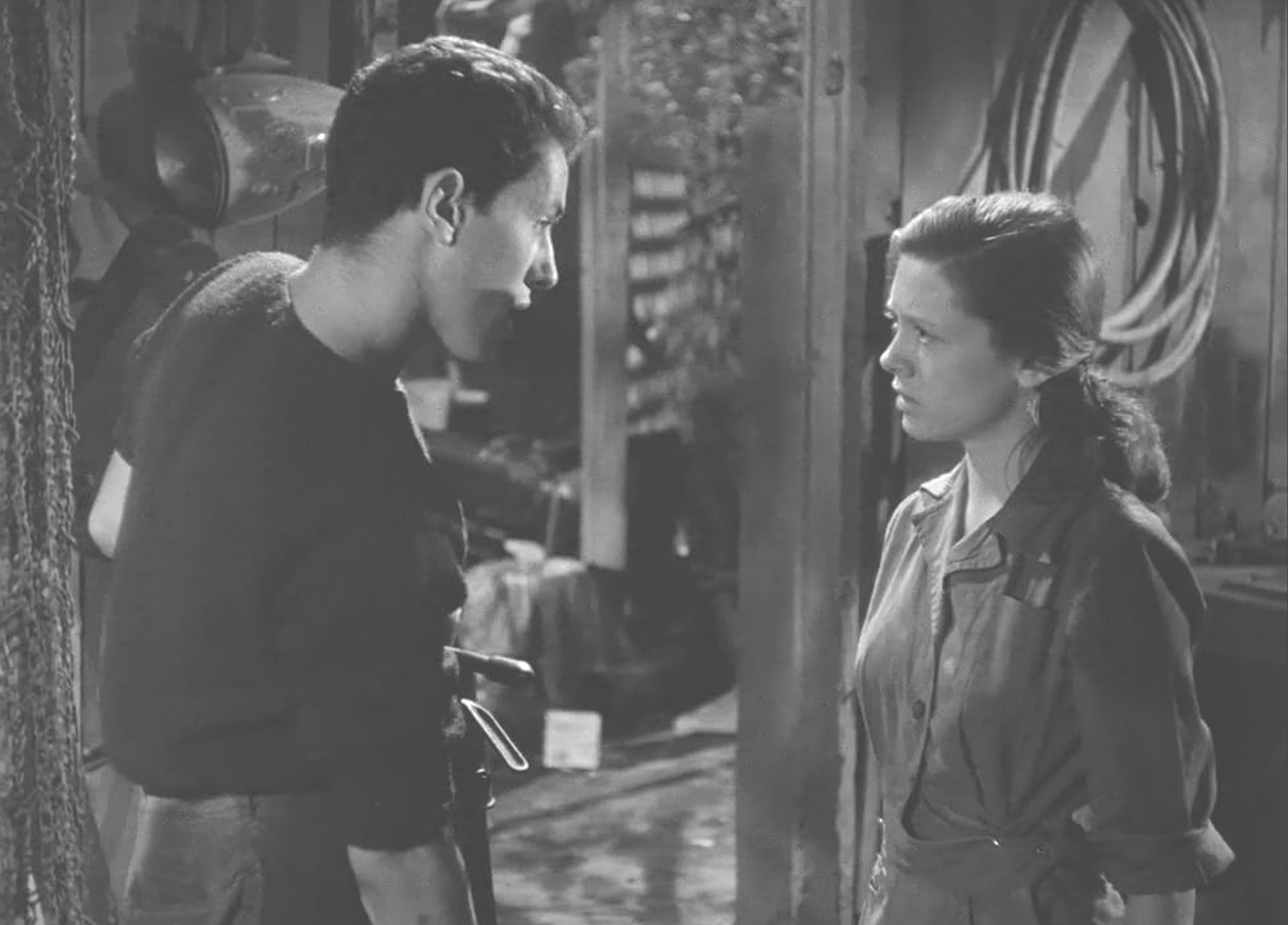
This is where the real story begins. It’s about two innocent souls in an evil world. Keechie, who was raised like a boy by a criminal, has a heart of gold matched by a strong sense of morality. And Bowie, who spent the better part of his youth behind bars, where he was raised by wardens and inmates, wants to reform himself, if only for Keechie. The two of them end up inventing their own rules, unwittingly defining true love for the rest of us.
From the get-go, Keechie’s direct questions bring out the best in Bowie:
“Did you shoot that man in Selpa?”
“It was me or him,” Bowie said. “He was coming around the car after me with a gun.”
The chair under Keechie creaked a little as she moved....
“I can still square myself up.”
“No,” Keechie said. “You can’t beat it this way.”
“Deep down in me I know I can’t, but I myself says I can.”
But, after their initial heart-to-heart, Bowie immediately backslides, establishes a recurring pattern in the story: misplaced loyalty. Against his better judgement, he drives his less-than-honorable partners down to less-than-reputable West Texas to meet up with T-Dub’s sister-in-law, who supplies them with a furnished house to hide out in. In exchange, they give her a cut from bank robberies to help get her husband out of prison.
After hitting a couple of banks -- and stealing over a hundred thousand dollars -- the robbers divide up the proceeds and go on a spending spree. Among other luxury goods, Bowie buys a “lady’s wrist watch with six diamonds on the band. That Little Soldier will open her eyes when I had her this.”
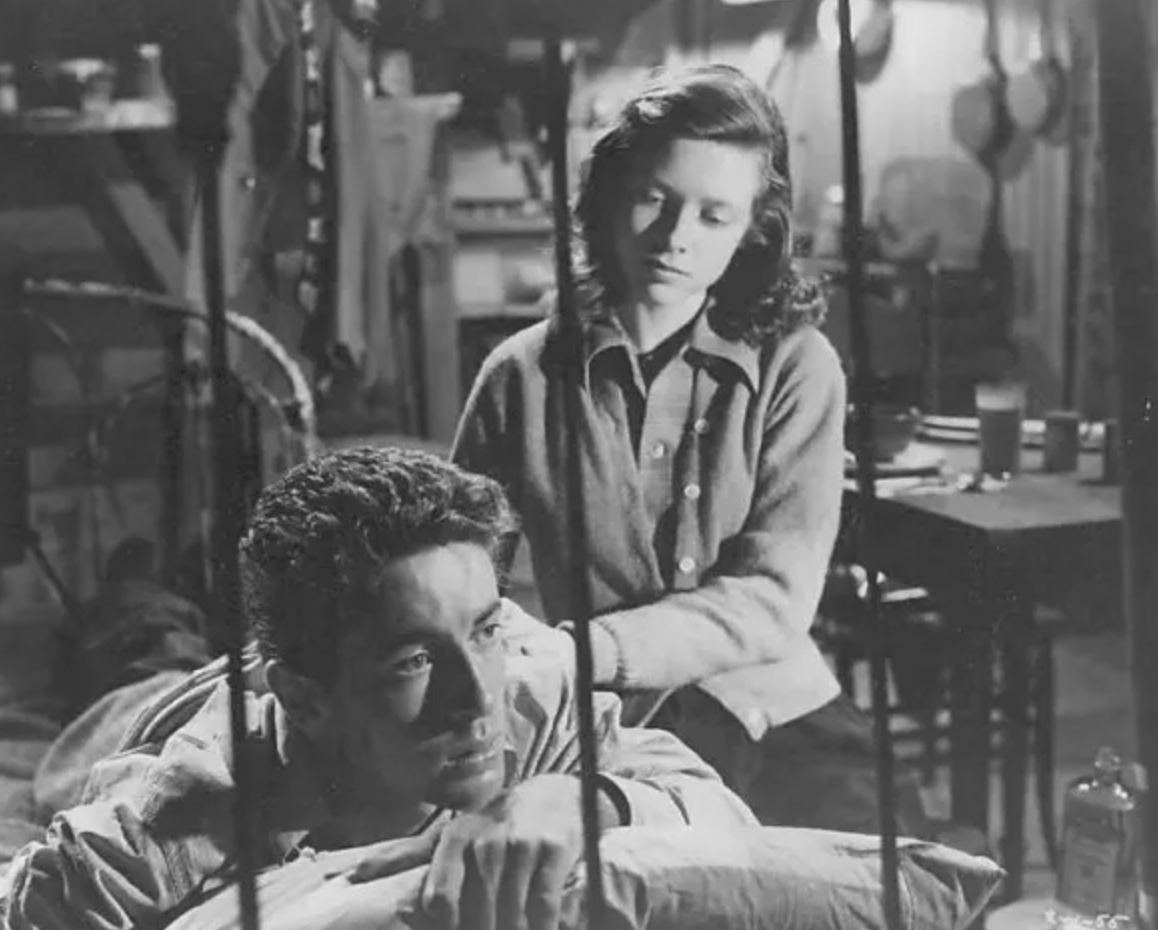
Of course, things are going a bit too good for Bowie. Time for trouble. On the road back to Keota, he gets into a serious traffic accident. Two uniformed cops arrive at the scene. Chicamaw, who has been following in another car, pulls up and shoots the cops, bang–bang–bang, just like that. Bowie passes out -- and wakes up in severe pain, back in Keota. Keechie is standing over him with a hot, wet towel in her hands.
Bowie makes the mistake of trying to impress her: “I got money. On me and that brown bag under the bed. Nineteen thousand dollars.” She sets him straight: “I would do this for a dog. If you will turn over and pull your shirt up I will put some liniment on your back.” Her tough love works. Before long, the two of them are quietly eating soft-boiled eggs and crumbled crackers out of peanut-butter glasses like children -- or an old married couple.
Not that Keechie’s rough femininity is lost on Bowie: “She had paint on her mouth tonight, but looking at her lips was like spying on her unclad through a keyhole.” In typical film noir fashion, what comes next is signaled by what comes after: Keechie frying bacon for Bowie in the morning.
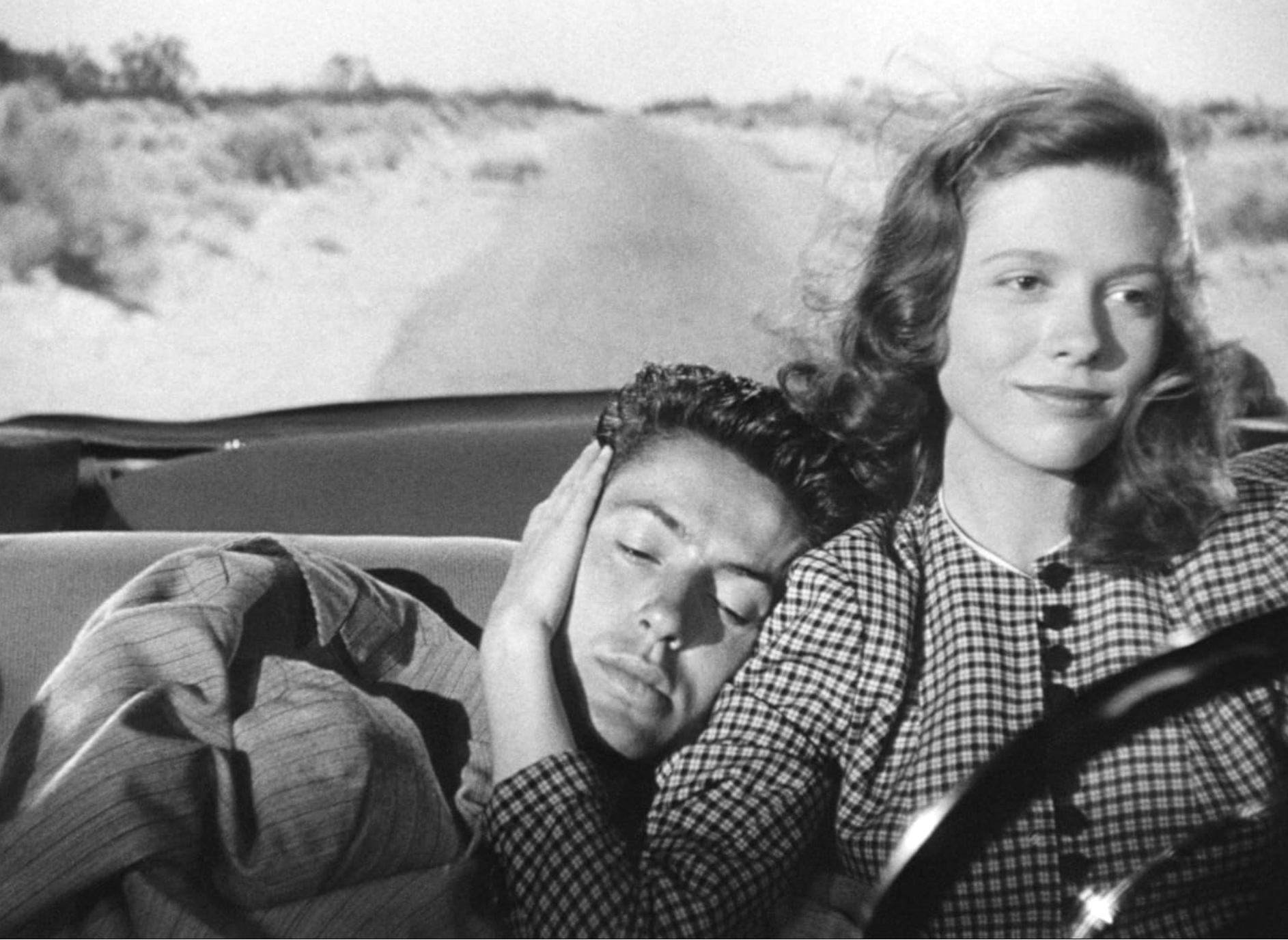
Over breakfast, Bowie reads aloud about himself in the newspaper. Realizing that the cops are hot on their trail, the two hit the road for Oklahoma. Keechie, wearing a military coat and behaving like a gangster, is at the wheel, “taking curves like they weren’t there.”
Outside Arbuckle, they rent a small, primitive cottage at the back of a former sanitarium that Bowie says “looks like a jail.” Before long, Keechie turns it into a home -- and begins wearing Bowie’s clothes: “She was funny that way, always wearing something of his and even sleeping at nights in one of his shirts and he had paid fifteen dollars for that negligee and boudoir slippers.”
Not that it helps. Bowie keeps getting pulled back into his past, robbing Keechie of her dreamed-of future for them both. In the end, the two outlaws are betrayed by the people closest to them -- family -- suffering the same fate as Dillinger. The final scene is so horrible that Anderson resorts to “reporting” it in a local newspaper. Despite the literary sleight of hand, it isn’t easy reading. Out of the blue, you’re hit in the face by hostile front-page obituaries of two close friends.
* * *
Audiences are spared the gruesome ending in Nicholas Ray’s 1948 cinematic adaptation, They Live by Night, which was co-written by Charles Schnee, best known for classic westerns (Red River) and film noir (The Bad and the Beautiful). It was Ray’s directorial debut. Although the cinematographers made film history with a remarkably realistic opening shot from a helicopter that follows the bank robbers in their convertible Model-T on a dusty country road for a full two minutes, what has endeared the film to generations of viewers is the delicately awkward -- and believable -- relationship between Bowie and Keechie.
The prequel to the opening credits shows an intimate moment that doesn’t look acted with the almost-too-well-cast Cathy O’Donnell and Farley Granger. As the two lovers laugh and kiss, subtext fades in and out: “This boy ... and this girl ... were never properly introduced to the world we live in....” As it turns out, the two leads were friends off screen long before the film was made. In fact, Granger pushed Ray to have O’Donnell play Keechie. (Given their obvious chemistry, they were reunited in Anthony Mann’sSide Street the following year.) Ironically, O’Donnell, who was raised in Arkansas and Oklahoma, had just lost a strong redneck accent that would have been perfect for the role, thanks to draconian diction lessons from Samuel Goldwyn.
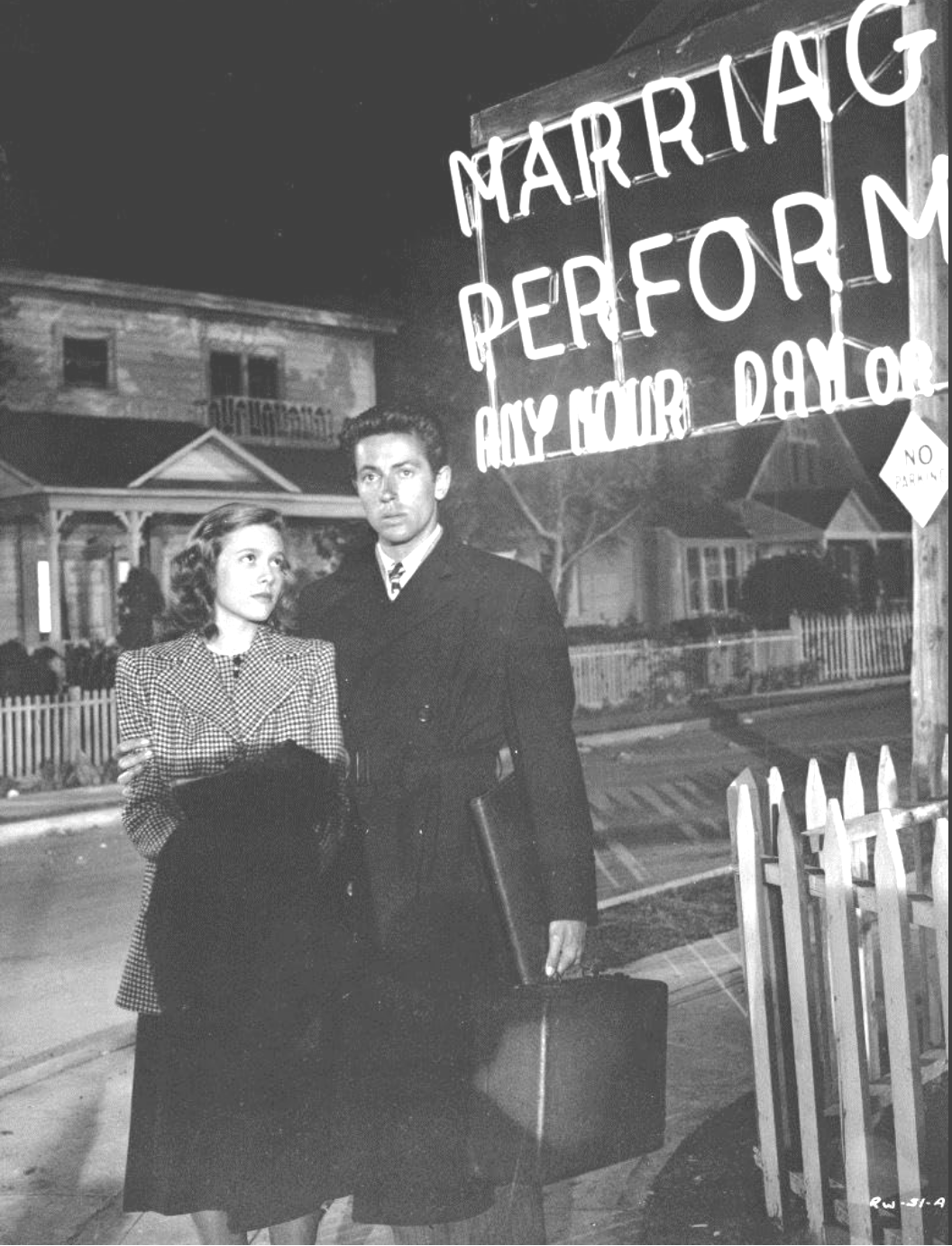
The screenplay softens the story somewhat, removing the relentless Depression-era depiction of what eventually became known as “trailer trash” and adding the Hollywood default for serious romance: marriage. That said, the iconoclastic auteur director, who went on to make Rebel Without a Cause in 1955, adds a wedding scene at a roadside chapel worthy of David Lynch’s debut horror film, Eraserhead. The creepiness of the overly friendly Justice of the Peace is matched only by “Old Filthy,” the overly curious owner of the newlywed’s cabin hideaway, and his weird-o son, Alvin. As a finishing tough, Ray gives the drunken Chicamaw, who pays Bowie a surprise visit at the cabin, a glass eye. It’s hard to look at the prosthesis for any length of time, even in black and white.
Despite all the strangeness, the film is a softie at heart, with scenes that improve on the book, such as when Bowie gives Keechie the wristwatch:
Bowie: “What time is it?”
Keechie: “I don’t know.”
Bowie: “There’s no clock here to set it by.”
Keechie: “It’s a nice watch.”
Bowie: “Well, what time do the hands say?”
Keechie: “Five minutes to two.”
Bowie: “That’s close enough.”
Keechie never sets the watch, but Bowie keeps asking her what time it is. Both know that’s his way of saying what he can’t. And Keechie keeps responding with “five minutes to two,” meaning she feels the same. Their awkward intimacy is humbling to watch.
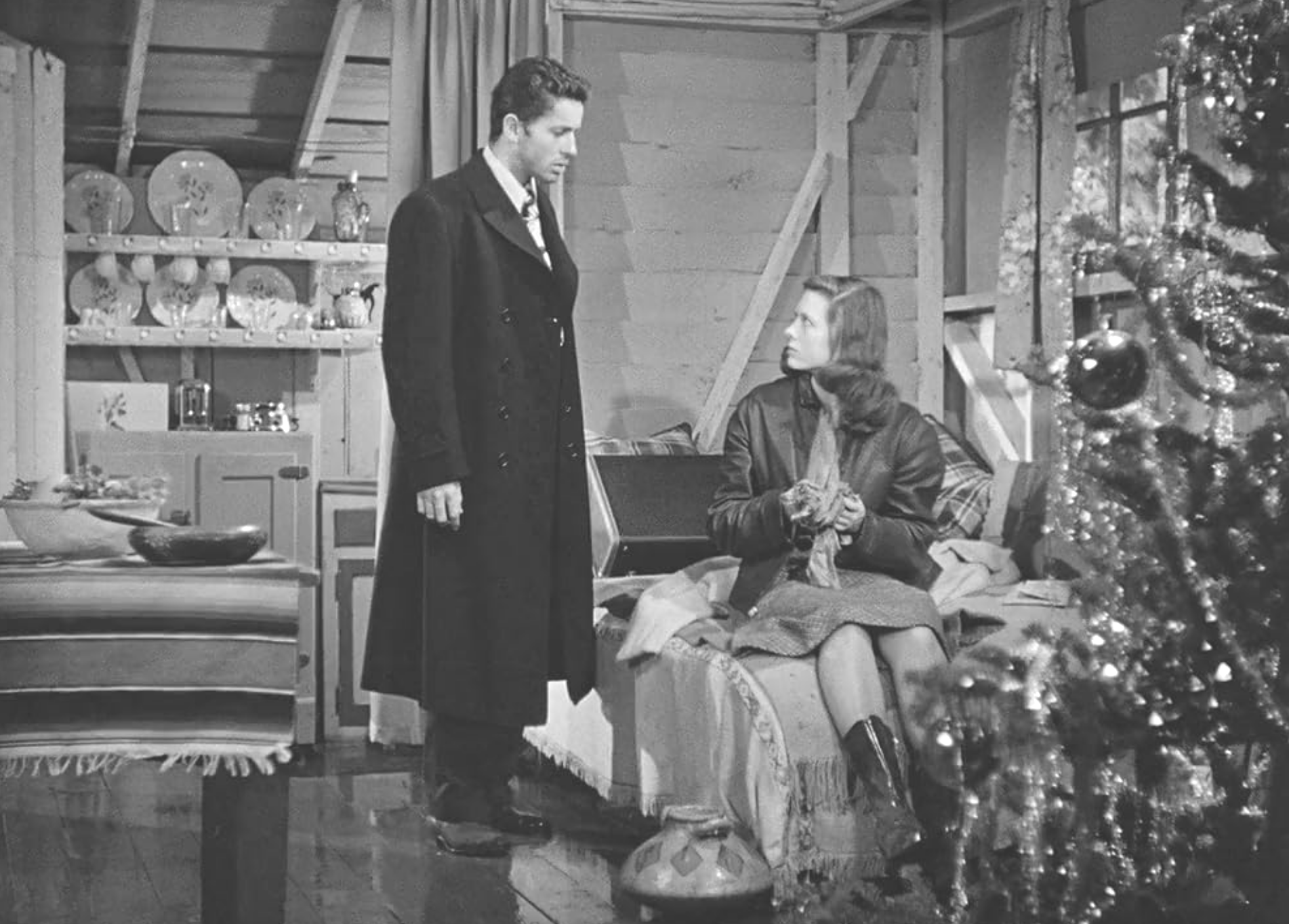
Nevertheless, the film doesn’t shy away from uncomfortable topics. Near the end, Bowie is less than happy to learn about Keechie’s pregnancy, which would definitely complicate their run from the law. Keechie’s shot-from-the-hip response makes another kind of film history: “You don’t see me knittin’ anything, do you?” Despite stepping around the letter of the Hays Code, the line is shocking -- even to modern audiences -- coming from Keechie.
In the film, Bowie and Keechie’s love is put to the ultimate test as armed men on both sides of the law close in. The two overcome the impossible with remarkable dignity and calm, albeit at a very high cost. It’s their very personal -- and poetic -- form of triumph.
* * *
Unfortunately, the quasi-documentary remake in 1973 lacks the historical imagination of the original. Yes, the title is Thieves Like Us, just like the book. Yes, the screenplay follows the original story closely. Yes, the film was directed by Robert Altman, who was eventually nominated for seven Academy Awards. Yes, Keith Carradine and Shelley Duvall are perfectly cast as Bowie and Keechie. But the film is flat, lacking the heart of the 1948 version. A nontrivial cause is the use of dead air instead of a soundtrack, a typical 1970s “realism” gimmick that makes even well-delivered lines sound rote. It’s as though the filmmakers thought the original film was too soft and sentimental. The result is strangely cartoonish -- and not in a good way.
A little respect for the past would have helped. A decade later, Bob Rafelson and David Mamet showed how it’s done. Despite color film and bigger-than-life stars Jack Nicholson and Jessica Lange, their remake of The Postman Always Rings Twice is a humble tribute to the original film adaptation in 1946.
* * *
Fortunately, They Live by Night has stood the test of time -- after a very rough birth. The eccentric industrialist Howard Hughes, who took over RKO Pictures just after shooting stopped, shelved the film for two years because he didn’t know how to market it. During this time, it was released as The Twisted Road to a single theater in London, where it received rave reviews. Finally, at the end of 1949, RKO released the renamed They Live by Night in the U.S. Despite critical appeal, it lost half a million dollars. (Devil in a Blue Dress met a similar fate almost half a century later.)
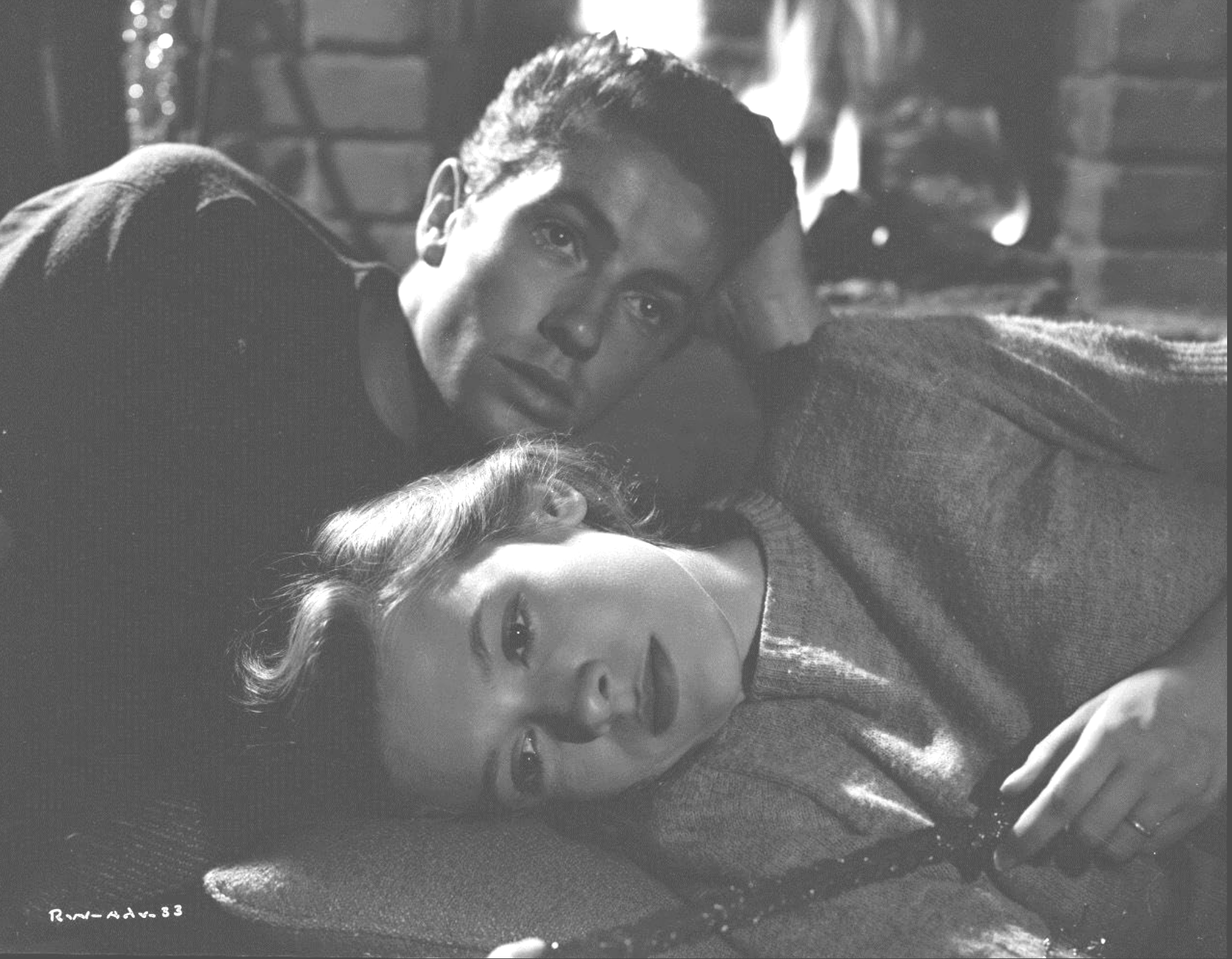
In an interview many decades later, Farley Granger recounts this bittersweet memory, noting that the cast and crew were made up of relative nobodies who knew from day one that the film was very special. Eddie Muller, founder and president of the Film Noir Foundation, lists They Live by Night as one of the “25 Top Noir Films” ever. To this day, it’s featured in film noir festivals on both sides of the Atlantic -- and is available on Amazon Prime.
There’s a lesson in there for all of us.